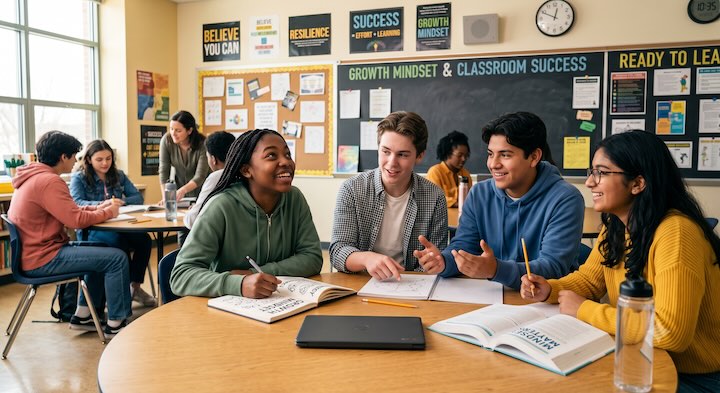
Academic success is not shaped by instruction alone. It is also shaped by how students experience learning: whether they believe effort matters, whether they feel capable of growth, and whether the classroom environment encourages them to take on challenging work.
The National Study of Learning Mindsets, led by researchers and shared by the Student Experience Research Network, offers important evidence for this idea. The study examined a brief online growth mindset program for students transitioning into high school and became the largest randomized controlled trial of an online growth mindset program in U.S. K–12 settings. The study used a nationally representative sample of regular public high schools, giving the findings unusual strength and relevance.
The program helped students understand that intellectual ability can grow over time. Students completed two short 25-minute sessions that explained how the brain can develop and asked them to reflect on why learning and growth mattered to their own lives, families, communities, and futures.
The results are encouraging. The study found that the program reduced fixed mindset beliefs across student subgroups and improved key academic indicators for students who had previously been lower-achieving. Among these students, the program improved 9th grade core-course GPA and reduced the share of students earning a D or F average in core subjects. The study also found an increase in enrollment in advanced math courses in 10th grade.
One of the most important lessons is that mindset does not work in isolation. The study found stronger effects in schools where the peer climate supported the pursuit of challenging academic work. In other words, students benefit when growth-oriented messages are reinforced by the learning environment around them.
This insight is central to IUME Foundation’s Student Readiness, Resilience, and Classroom Success Program.
Student readiness is not only about mastering academic content. It is also about helping students build the confidence, persistence, learning habits, and sense of agency they need to succeed in the classroom and beyond. For students in high-need campuses, these supports can be especially important because academic gaps are often reinforced by frustration, disengagement, and a belief that falling behind means they cannot catch up.
IUME Foundation’s work is designed to help schools address both sides of the challenge: academic recovery and student resilience. Through structured support, teacher-guided implementation, and accessible digital learning experiences, the Foundation aims to help students re-engage with learning, practice key skills, experience progress, and build the belief that improvement is possible.
The National Study of Learning Mindsets reinforces a powerful message: when students believe they can grow, and when schools create environments that support challenge and persistence, readiness becomes more achievable.
For IUME Foundation, this is not a separate idea from learning recovery. It is part of the foundation for it.